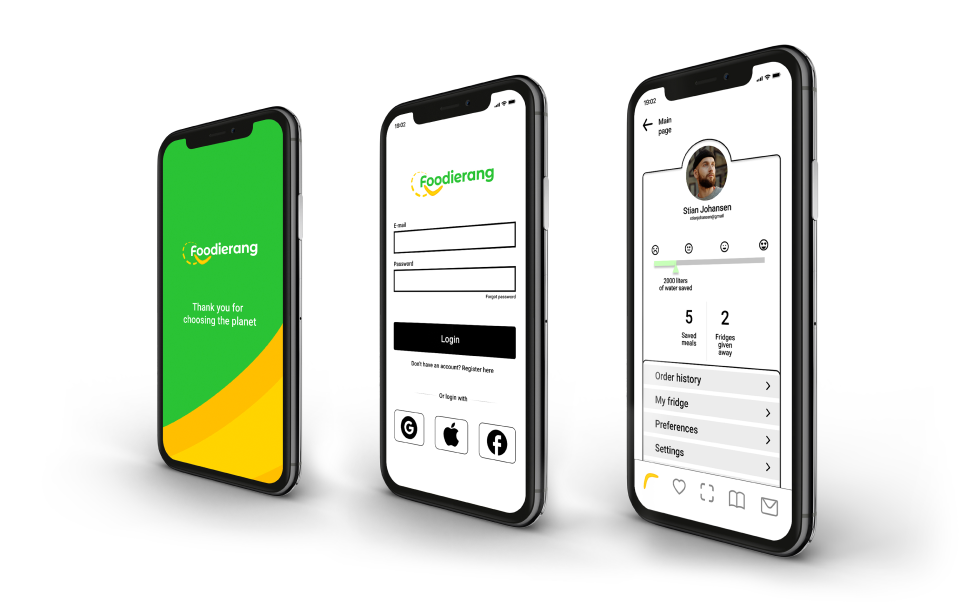
I took part in every step of the Design Thinking process.
The Team
3 students of UX Design.
Tools
Figma
Miro
Zoom
Google docs
Duration
5 weeks
Challenge
Around the world, many people are not fortunate enough to have clean running water from taps, whether it is to prepare and cook food, drink, or even for primary hygiene purposes like bathing or cleaning. Some of these people must travel significant distances to get clean water, and others might not know if the water they are using is safe or not.
With climate change, there has been some pressure on the environment, causing droughts in some world regions. This makes clean water more of a challenge. At the other end of the scale, people take water for granted and waste large amounts of water.
In this project, we are going to look into the water scarcity problem around the world with the main focus on Norway. Why is it a problem and what is the cause of it? Freshwater is not a limitless source and many people around the world experience it every day. Scientists predict that in less than five years 50% of the world’s population will be living in water-stressed areas. Following each step of the design thinking process, we will take on the challenge of helping and educating people on the topic of water conservation.
Many people might think that Norway has a limitless source of water, but is it really the truth? Not so long ago citizens of Oslo received a text message from the municipality asking to shorten the showers and mindfully use the water because of the water shortage.
We are going to look for a way for educating people about water and helping to alleviate water-related crises.
Design Thinking process
Empathize
Research Goals
Throughout the research, we would like to find out how we can educate people about the importance of water and how to save it.
How can people save water and why is it important?
When do people waste water?
What do people know about their water usage?
Who is wasting water?
Research Plan
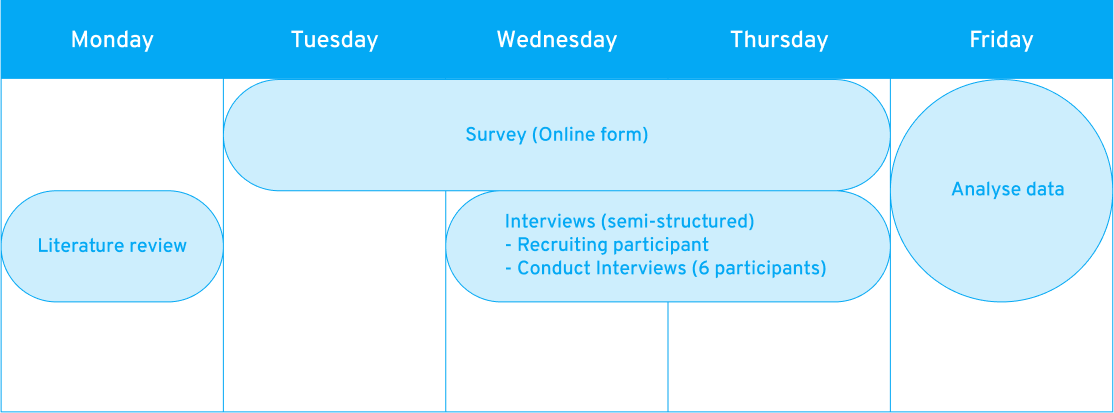
Literature Review
We have conducted our secondary research by collecting both quantitative and qualitative data. Gathering information from different sources gave us insights into what most of the water is being used for. We have found out that water usage at home doesn’t have a big impact on water scarcity. It turns out that the main part of our water use comes from the food that we eat.
When looking closer at the water usage in Norway we have found out that on average Norwegians use more water than the world average.
The high usage of water in Norway suggests that people either have no knowledge about how important is to save water or they don’t have enough tools to do so. Studies show that if people saved food they would also save a lot of water. Previously in Norway, there were campaigns that tried to make people realize how important is to save water. Unfortunately without luck.
Interviews
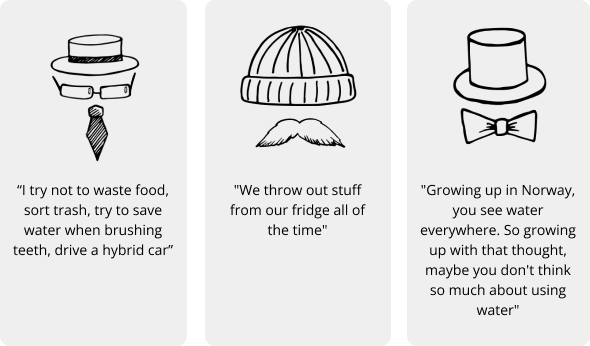
We have interviewed 6 participants. We wanted to find out how much they know about the importance of saving water and how aware they are of their water usage. Each participant had their own perspective on water saving. All of them said that saving water is important. Our participants were aware of their direct daily water usage however they didn’t realize that the most of the water usage comes from meat production. One of our participants already is a vegetarian for environmental reasons.
Surveys
By collecting quantitative data through a survey we have collected 84 responses. 95,2% of participants think that saving water is important but only 42,2% care how much water they use and 47% say they sometimes care.
71,1% of the participants are aware that producing a beef burger takes the most water. 66,3% answered that they are doing something to save water. 92,8% drink water from a tap, and 50% of them wait 1 – 5 sec before the water gets cold. 55,4% take a 5 – 10 min shower, and the majority don’t take baths. 67,5% use energy-efficient dishwashers. 75,9% turn the water off while brushing teeth.
91,6% answered that they are meat eaters and 27,6% of them eat meat every day, 47,% every second day, and 23,7% twice a week. 50% of meat-eaters answered that they would be willing to reduce eating meat if they knew that would help to save water.
Affinity mapping
After organizing data from the literature review, interviews and surveys we have used the affinity mapping technique. By connecting facts with similarities, we were able to organize them into groups. After creating the groups, we interpreted the facts in each group to create themes. The affinity mapping technique helped us to turn our facts into insights.
Insights
People living in Norway use more water than they should because they don’t think they have an impact on water scarcity.
Some of the people in Norway would be willing to reduce meat consumption if they knew how big influence meat has on water usage.
Meat eaters are skeptical to eat less meat because they have not found any good substitutes for meat that they are satisfied with.
People in Norway don’t have enough knowledge about water issues, but many still try to make environmentally friendly choices in their daily life.
The biggest water usage goes to the food and clothing industry which makes it hard for an average person to control. It’s more important to make thoughtful decisions when it comes to diet and clothes than having shorter showers.
People that eat meat, are indirectly causing the biggest water usage. More meat = more water used.
Recommendations
We should educate people in Norway about why it is important to save water to show them that they have an indirect impact on water scarcity.
We should find a way to encourage people to reduce meat in their diet.
People living in Norway use more water than they should because they don’t think they have an indirect impact on water scarcity.
We should think of a new app or other tech solution to help people save water.
People need to be motivated to make more environmentally friendly choices.
There should be better substitutes for meat and exciting ways for people to explore new alternatives.
We should try to encourage people to take more environmentally friendly choices, and tell them why it is important.
We need to make people aware that meat is the bigger sinner when it comes to water wastage.
Define
Persona
Our primary persona is an assembly of the interviews, the literature review, and the survey that we have collected through research, with a touch of imagination. Say hi to Stian!
Context Scenario
Key Path Scenario
After talking to the girl in a bar, Stian downloads the app she has recommended. He can register through Facebook, Google, Apple, or by email. He logs in with Google (since he already is registered there) and starts browsing through a list of free food available for pick up.
There are many posts to choose from on the main page, but suddenly he sees a post that attracts his attention. It shows a picture of some meat and vegetables inside of a fridge.
The author of the post is going for a holiday in two days and his fridge is full of meat and vegetables. It will all expire before he comes back. That’s why he has made a list of products that are available to grab for free.
Stian discovered that the app gave him recommendations with dishes he can make from some of the products on the list.
Stian wants to make sure that the food is still fresh and available, so he writes a private message to the author.
In 10 minutes he receives a reply and confirmation that the food is still fresh and can be picked up between 6 and 8 pm the same day. Stian uses the map function and can easily find the location for where to pick up the food.
After picking it up, he goes home and makes a lasagne with a salad on the side. He has used one of the recipes the app recommended.
The day after he opens the app again and discovers that he can order very cheap food. It comes from restaurants that made wrong orders and instead of throwing it away someone can get it for 10 -20% of the full price.
Stian noticed a four-minute-old post from a restaurant in his neighbourhood. It’s a burger for only 30,-. He orders it and the page directs him to the checkout. He can choose to pay directly with Vipps, apple pay, or by regular card. He pays with Vipps and a short time after, he is full, happy, and ready for work.
While in the app Stian discovers that the app also offers a way to scan products to see if they are still fresh. By using the camera function he takes a picture of one of the peppers. The app scans what it sees, and helps him understand if the pepper is possible to eat or not. He reads that if a pepper has mold on it, it can’t be eaten. The pepper has no mold on it and Stian continues to scan all the ingredients.
He ends up with 9 out of 10 ingredients that are still possible to eat. He finished the scanning process and the app gives him some recipe recommendations to choose from based on the recent scans he did. Stian makes an omelet. After finishing eating, he is full and he also feels good about himself for taking environmentally friendly choices.
4 W's
We used the 4W’s technique to make the problem statement:
Who is experiencing the problem? People wasting food and everyone living on earth.
What is the problem? People waste edible food that requires a lot of water to be produced.
Where does the problem present itself? In Norway but also in many other countries.
Why does it matter? It matters because there is a lack of water in many places in the world. People in Norway throw away a lot of food that could have been eaten and they are not aware of the consequences. The world will be a better place to live in if we reduce the indirect water usage from wasting a lot of food such as meat and dairy products. More drinking water in the world = less suffering.
Problem Statement
People who waste food in Norway indirectly use a lot of water because they are not aware of how much of it is being used to produce it. If we could educate people as to why they should waste less food, it could help reduce the level of freshwater used in the food industry. This will affect the future both for people living in Norway, and the rest of the world.
How might we?
HMW convince people that saving water is important?
HMW help people to save water?
HMW encourage people to reduce meat intake in their diet?
HMW decrease food waste in Norway?
HMW encourage people to buy more second-hand clothes instead of new?
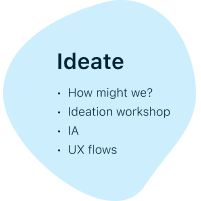
Ideate
Ideation workshop
We have planned and organized a workshop to generate as many ideas as possible. We have used two ideation techniques – brainstorming and sketch storming.
Brainstorming
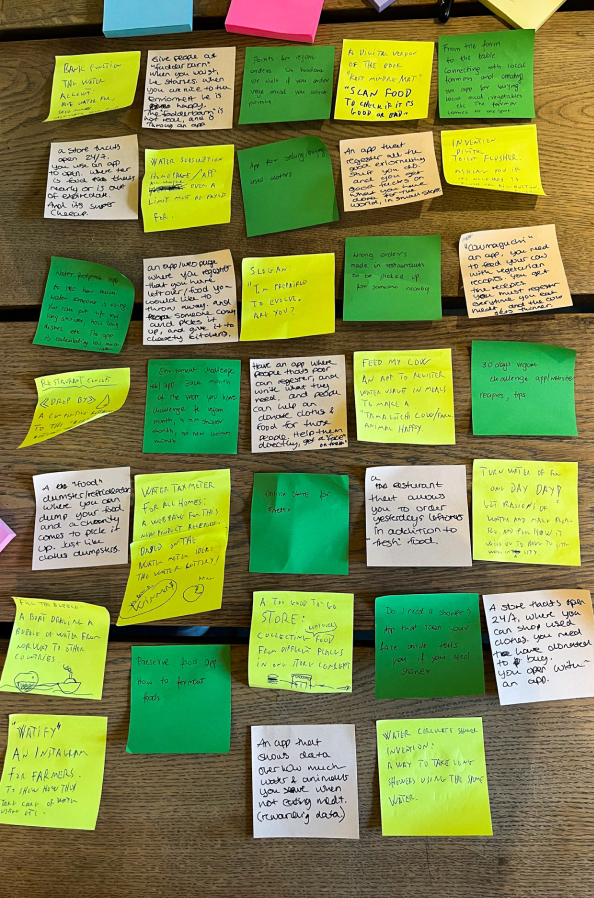
The facilitator opened the workshop with an introduction to the topic. After an icebreaker activity, the facilitator framed the problem by presenting the problem statement and How Might We questions. We had them visible throughout the workshop so everyone could have them fresh in mind when generating ideas. The first ideation technique we conducted was brainstorming. We used 15 min for writing ideas on sticky notes. During that time we were able to generate many different ideas.
Next, everyone presented their own ideas and the group discussed them. We were able to organize them into groups and connect together the related ones.
After a short break we discussed the most interesting ideas and we have chosen the best one. An app that will allow people to waste less food by giving it away to someone else. The app will also be available for a restaurant that made wrong orders and could be picked up by someone nearby. There will also be a scan feature that will tell the user if the food is still good to eat or not.
Sketch storming
After landing on the top idea, the facilitator started the second part of the workshop – sketch storming.
We had three 5 minutes sessions of sketching based on the top idea. After the sketch storming, we discussed and shared our sketches to improve the idea even more.
Competitive analysis
Information Architecture
User Flow
Prototype
Sketches
Based on our sketches from our sketch storming session, we have specified our ideas by conducting a round two sketching session. We have discussed the sketches and re-sketched the most important screens. This gave us a better understanding of how the app will be built. Here is the result:
Wireframing
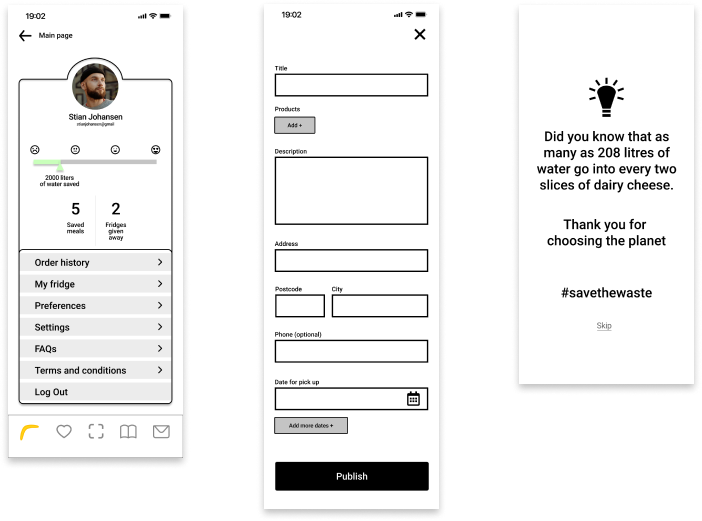
Based on the sketches, we have built low/mid fidelity wireframes. We needed to include some text within the app for the testing purposes. Creating wireframes in Figma allowed us to create an online prototype which could be used in remote usability testing.
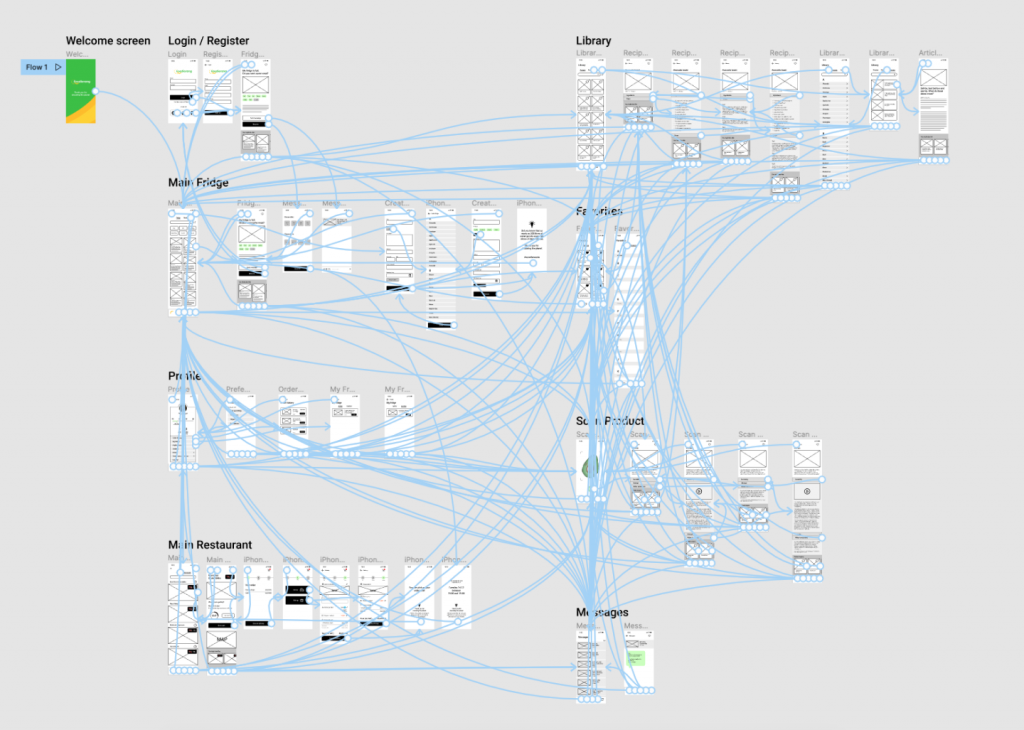
Wire Flows and Task Flows
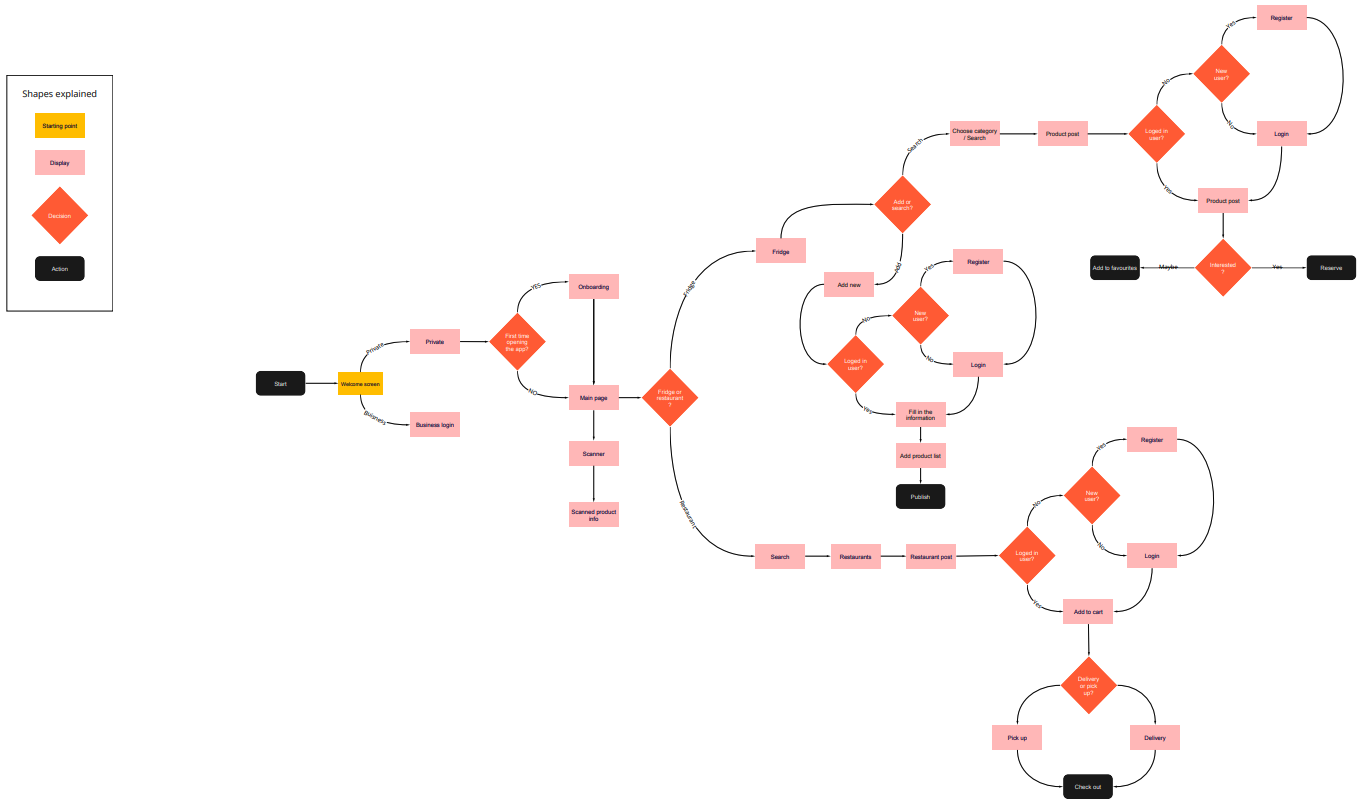
Choose food from “Fridge” and send a message to the creator of the “Fridge-post”. Then pick a date and reserve it. (New user)
Task Flow 1
Wire Flow 1
Create Fridge-post and find where it is. (Existing user)
Task Flow 2
Wire Flow 2
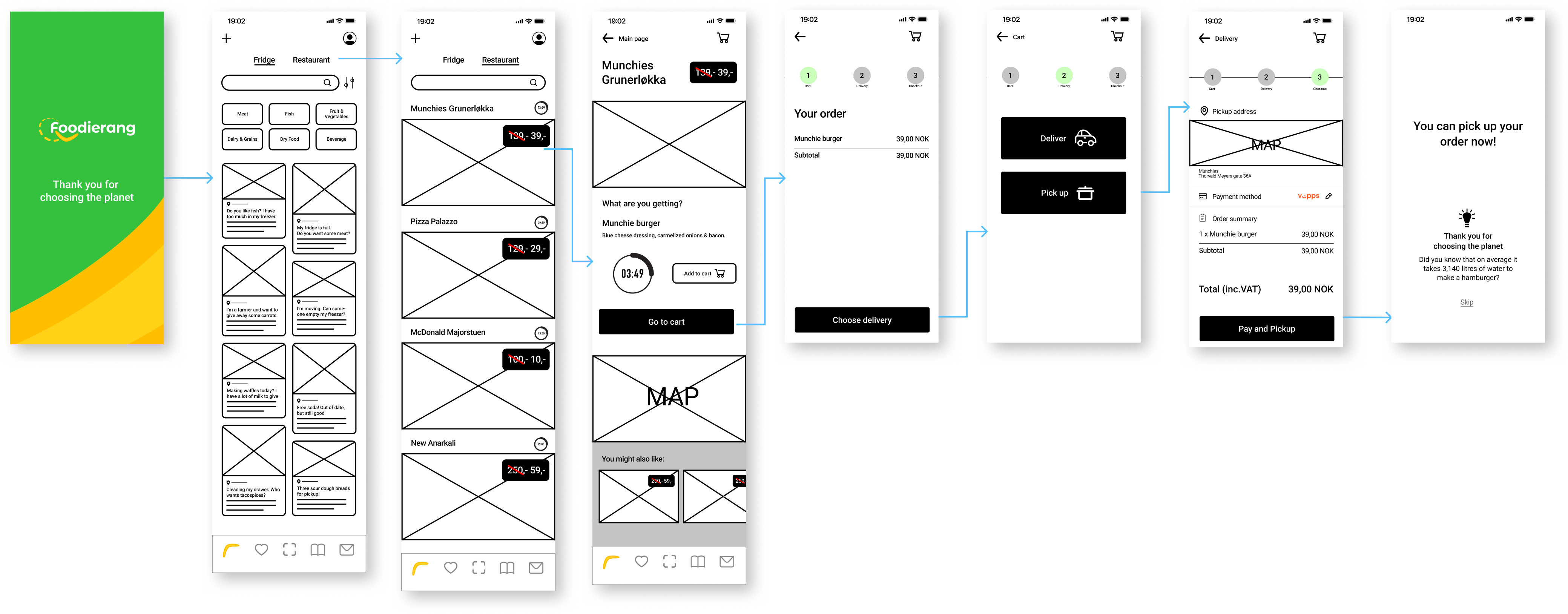
Choose food from a restaurant and finish checkout for the pick-up option. (Existing user)
Task Flow 1
Wire Flow 3
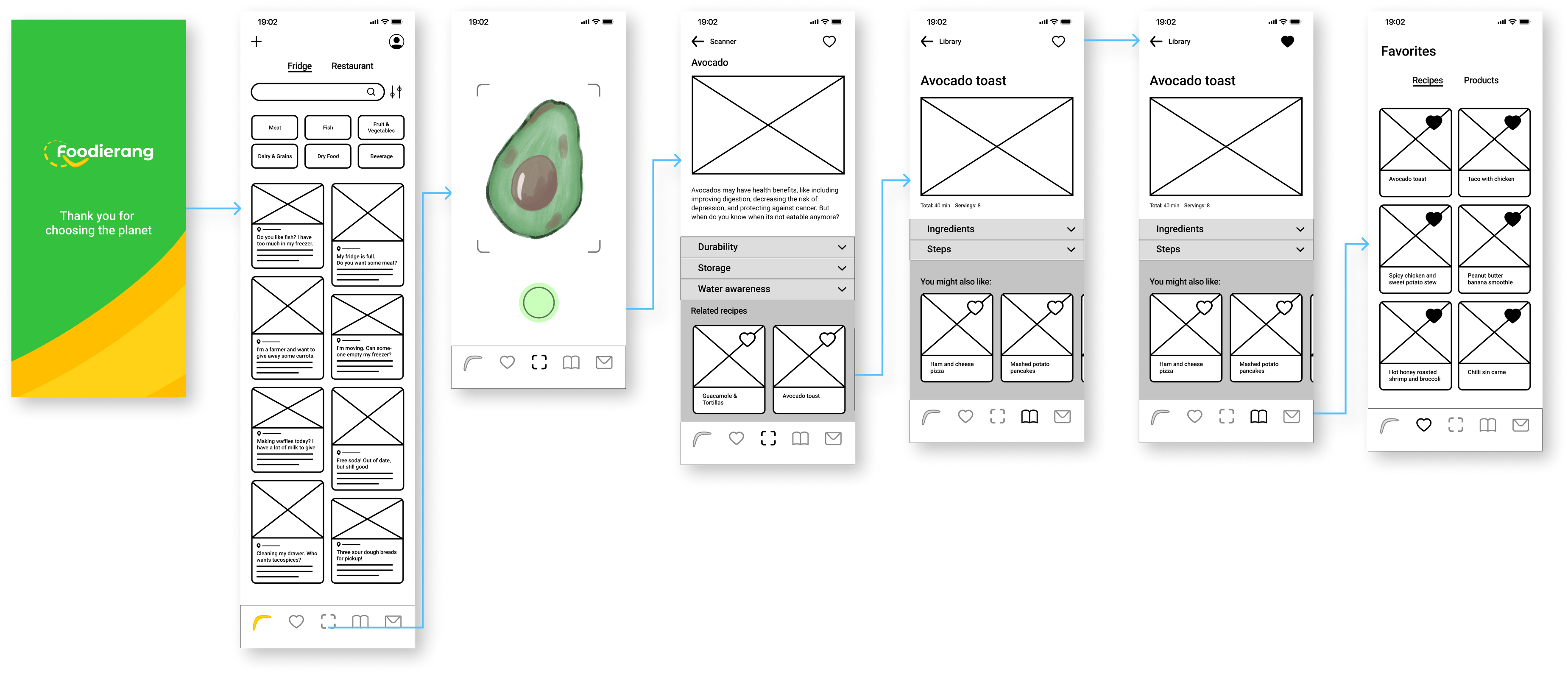
Scan product, find a recipe and add the recipe to favorites. (Existing user)
Task flow
Wire Flow 4
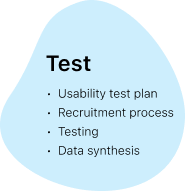
Test
After making wireframes and wireflows, we have conducted usability testing of the Foodierang App. We decided to test four user flows and we have found some interesting pain points that can improve the app. We have made The Foodierang App in Figma and created a prototype. We have also gathered all documents from the testing and preparation in one folder.
Scope
We are testing the concept design of the Foodierang app. We are conducting usability testing to get feedback on the design and the general look of the app from the potential users. We hope to find ways to improve the app by getting insight from the users by listening to their opinions and watching their interactions.
Goal
The goal is to test if the concept of the Foodierang app is correct with the user’s expectations and if there are any usability issues. We want to check if there are any frustration points in the flow.
Key findings
Login to send message issue
Pain point
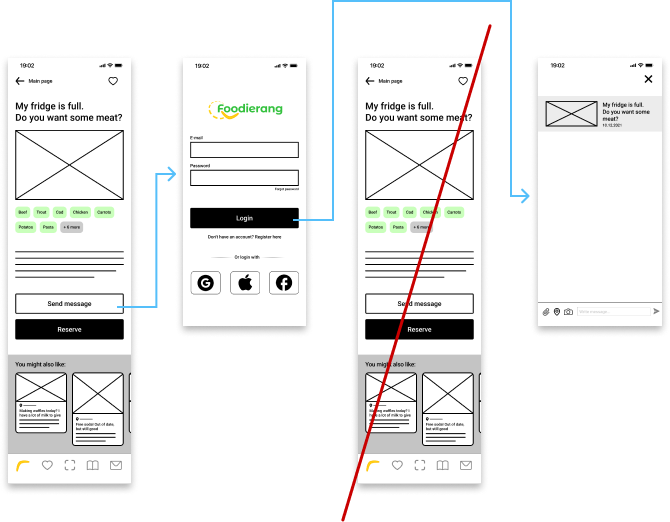
When new/not logged in users are checking out a fridge post, there is a “send message” button. To send a message, the user is sent directly to the login page. After login, they are sent back to the fridge post and need to tap the “Send Message” button again.
Insight
The user must be sent directly to the dialog page after login in when tapping the “Send message” button.
Suggestion
When tapping the “send message” button: Send the new/not logged in user directly to the dialog page after logging in.
Security
Pain point
How can users trust other users with their sensitive information as to their address etc?
Insight
People would trust other people more if they have verified their profile. People should also be aware of what kind of information they are giving out.
Suggestion 1:
Make people verify their profile, showing it as an icon in their profile.
Suggestion 2:
When people are making a new post, they can be reminded and warned about giving out sensitive information such as “I am going on holiday”. It can be a small text under the title when creating a new post, or it can be a reminder as a pop-up.
Visibility
Pain point
Users didn’t see the ‘Send message’ and ‘Reserve’ buttons.
Insight
The first impression of the screen doesn’t suggest scrolling down.
Suggestion
Move the buttons higher up so it’s visible without scrolling.
Add to cart
Pain point
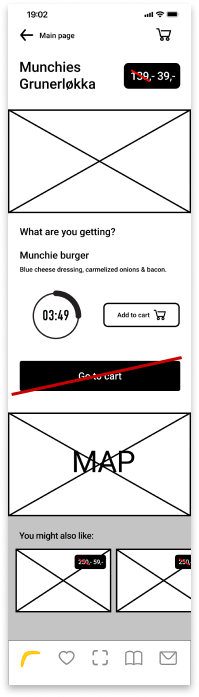
Users didn’t know that had to click Add to Cart first and then Go to the cart
Insight
Unnecessary double button on one page.
Suggestion
Instead of having two buttons add to cart and go to card it should be one that directs to cart right away.
Next steps
The Foodierang project was the first bigger UX project I have been a part of. Throughout the process I have learnt so much about myself, collaborating with others, how to overcome challenges and how to think outside the box. Following the Design Thinking process gave me huge understanding of why empathizing with users is crucial in order to create memorable experiences. This project finished on usability testing. However next step would be iterating, building higher fidelity wireframes, and further testing.